What Are 3D Embroidery Designs?
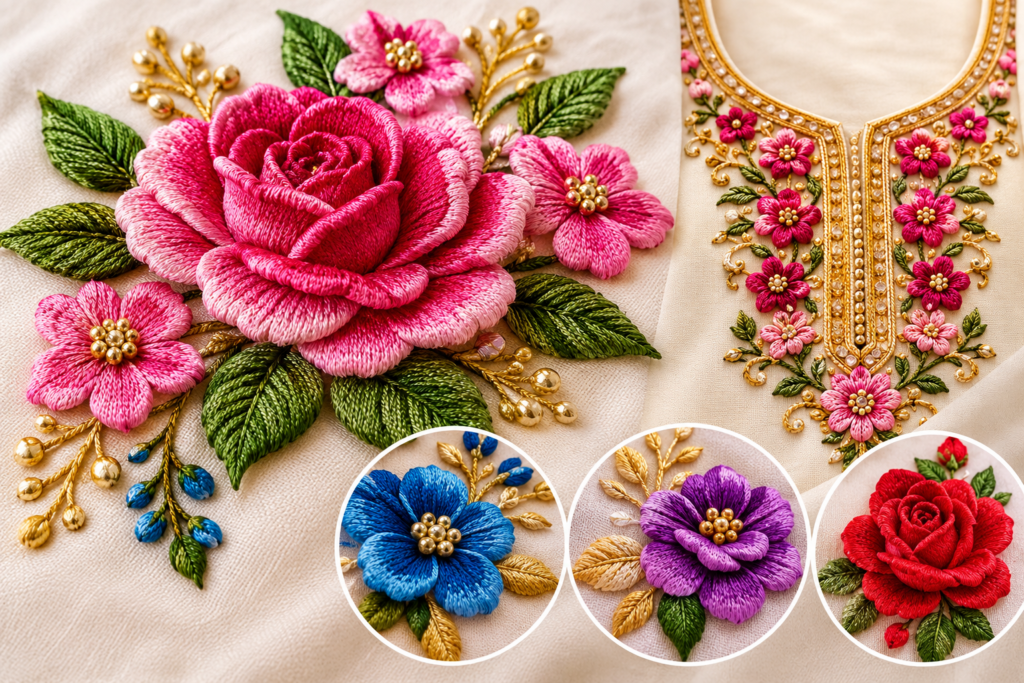
3D embroidery is an embroidery pattern that appears to have a raised effect. Unlike regular embroidery that remains flat all the time, 3D embroidery is done in such a way that it produces a unique effect, making it distinguishable from other forms of embroidery.
There are several ways of producing this effect; some will use embroidered foam, others will use additional fabrics, and threads or specific techniques of embroidering.
The 3D designs can include flowers, leaves, alphabets, logos, and various other types.
3D designs can suit conventional as well as contemporary garments. It can add elegance to any simple dress.
History of 3D Embroidery Designs in English
It should be noted that embroidery is an ancient method which people applied throughout history, namely, various patterns on clothes, bags, etc., were decorated by coloured threads. In the past embroidery was performed manually as skilled experts used special needle, thread and techniques for making a beautiful design.
There were some traditional ways of making raised embroidered design; for this purpose the padding or other layers could be placed under the stitches and make the pattern three-dimensional.
The above-mentioned historical example of raising technique is raised embroidery, or also called stumpwork, and became widespread within some areas of Europe in the 17th century.
Gradually, there have been some changes, concerning the equipment of sewing machines and the process of embroidery itself. Now with using special embroidery machines it is possible to perform more accurate and beautiful designs very fast.
Nowadays there is one popular technique of machine embroidery called 3D puff embroidery. The foam under the stitches allows making three-dimensional letters, logos, etc. In addition, there are modern computer programs for the preparation of the design for machine, and as a result such kind of designs is used in many spheres, including fashion industry.
How 3D Embroidery Designs Developed Over Time
3D embroidery goes through varied phases of development.
Traditional Raised Embroidery
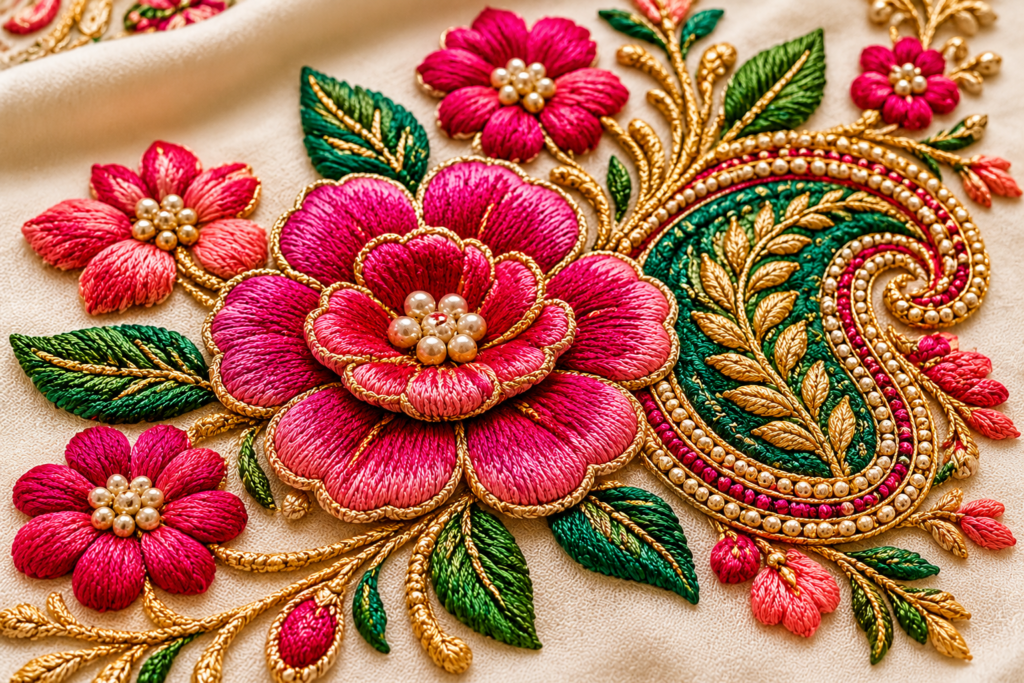
In raised embroidery, the embroiderers employed the use of padding materials, additional fabrics, and unique stitches in order for the designs to stand out. Most of the designs were created by hand.
Machine Embroidery
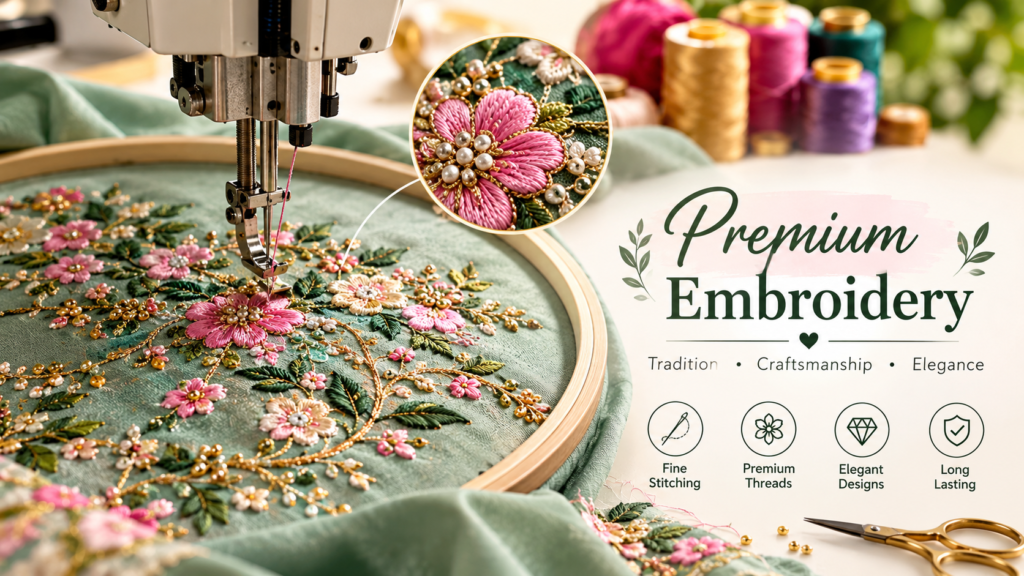
The introduction of sewing machines made it easy for many motifs to be easily reproduced since machines allowed designs to be easily duplicated.
Modern 3D Puff Embroidery
In contemporary 3D puff embroidery, embroidery foam forms an elevated base. It finds frequent use in designing big letters, signatures, and patterns.
Presently, one may use old techniques along with new technologies while designing embroideries.
Traditional Raised Embroidery and Modern 3D Puff Embroidery
Both types of raised embroidery – that is, the traditional and the new one – create a raised look through different ways of achieving it.
The traditional type often relies on padding or hand-stitching, whereas the modern type relies on the use of foam under machine-stitching.
Both methods have the potential to enhance embroidery. However, it remains unclear which of the two is the most suitable.
Materials Used for 3D Embroidery
3D embroidery is often done using materials such as:
Embroidery thread
Suitable fabric
Embroidery needle
Hooping for machine frames
Stabilizer
3D foam for embroidery puffs
Additional fabrics to be used in appliques
The materials needed differ depending on the kind of embroidery to be carried out.
Basic Steps of 3D Embroidery
Here are some basic steps involved in preparing the design for 3D embroidery:
Pick an appropriate embroidery design.
Pick the colors for the fabric and threads.
Prewash the fabric with the appropriate stabilizer.
Attach embroidery foam or padding, if required by the design.
Embroider the design with an appropriate technique.
Remove any excess foam or materials.
Review the completed design for its neatness.
If done on a machine, the design has to be prepared appropriately to enable the machine to embroider it.
3D Embroidery vs Flat Embroidery
Three-dimensional (3D) embroidery and flat embroidery are both methods that are used in order to adorn fabrics. Nonetheless, they differ in terms of appearance.
Feature
3D Embroidery
Flat Embroidery
Appearance
Lifted or raised
Primarily flat
Texture
Puffy or thick
Smooth
Materials
Foam/padding is possibly used
Thread and stabilizer
Design type
Big and decorative
Small and detailed
Uses
For logos, flowers, letters, and clothes
For clothing, patterns, borders
Impact on fabric
Creates more depth
Colour and details
Both types of embroidery can be very beautiful.